Tuesday, October 28, 2014

The Palais de Danse, a casualty of St Kilda’s fiery curse?


As most readers of this blog would know, the area currently known as the ‘St Kilda Triangle’ wasn’t always just the Palais Theatre, assorted palm trees and grassy slopes, and a dirty great car park.

Indeed, there was a time when the Palais Theatre wasn’t the only Palais in town. Next to it stood the Palais de Danse, a grand music hall of sorts (as well as a famed example of interwar architecture), which attracted party people from near and far.Nothing's changed there, then.

Photo: courtesy of Walking Melbourne (Palais Theatre to the left)
Mind you, the building we now know as the Palais Theatre was once also called the Palais de Danse (before its stint as Palais Pictures, which preceded its current incarnation as the Palais Theatre)…Confused? Yeah, me too.

Anyway, the Palais de Danse that concerns us here is the one built to the north of the current Palais Theatre in 1925 and designed by none other than Walter Burley Griffin and his wife Marion, NOT the Palais de Danse that is now the Palais Theatre! Got it?

Here’s an old photo of the Palais de Danse with the Palais Theatre (then Palais Pictures) and Luna Park, to put it in perspective.

L-R: Luna Park, Palais Theatre, Palais de Danse in the 1930s. Photo: Palais Theatre website

Stardust memories

In 1962, the poetically named Stardust Lounge was built, adjoining the Palais de Danse. Much to my annoyance, I’ve been unable to find anything out about this particular nocturnal haunt: the perils of not being a trained historian, I suppose. (If anyone reading this remembers going there, do get in touch!)
The Stardust Lounge. Too bad there are no punters to be seen. Photo: State Library of Victoria
 Photo: State Library of Victoria

Towering inferno

But by December 27, 1968, the Stardust Lounge and the Palais de Danse were gone, burnt down in a huge fire that would ensure they went down in history (and flames) as casualties of St Kilda’s so-called ‘curse’. Nobody was ever charged. (Intriguingly, the Palais de Danse caught fire soon after being built too, but from what I can ascertain, that one was salvageable).
1968 St Kilda Stardust Lounge and Palais de Danse on fire" by Jason Mervyn Barnett. Licensed under Public domain via Wikimedia Commons
Could it really be a curse? Or is St Kilda some kind of weird firebug vortex? 
The burnt-out ruins. Photo: Herald Sun
Whatever the truth may be, the fact remains that the suburb has seen more than its fair share of massive blazes over the years: eleven of them in 88 years, which have caused serious damage or complete destruction to some very significant buildings (the most recent being Donovan’s restaurant in August).

But the mystery doesn’t stop there. A few years after the Palais de Danse and Stardust Lounge burned down, the Palace Theatre was built on the same site… only to suffer a similarly fiery fate in 2007.
 

Anyway, here’s what the site looks like now:
Facing the bay
Facing up towards the Esplanade
To quote the great man himself, William Shatner… weird or what?

Sunday, October 19, 2014

Melbourne song of the month: "Shakin' All Over"/Normie Rowe & the Playboys (September 1965)

They say you can’t improve on perfection, but I’d argue that Normie Rowe’s version of the Johnny Kidd & the Pirates classic “Shakin’ All Over” comes pretty close. Released in September 1965 as a double A-side with “Que Sera Sera”, this monster hit needs little introduction. Apparently it was one of the top-selling Aussie 45s of the 1960s; certainly, it remained in the charts for more than half a year and hit the number-one spot in Melbourne, Sydney, Brisbane and Adelaide. 

Normie was already a teen idol by the time “Shakin’ All Over” (his fourth single) was released, but this catapulted him into almost intergalactic heights of pop superstardom. And no wonder! He sings it like he means it, if you catch my drift. Can’t you just imagine the effect this must’ve had on his teenybopper fans?! (Actually, no imagination needed. The video at the bottom of this post provides a clear picture, showing Northcote’s most famous son miming the song on The Go! Show to a hysterical studio audience)


Normie-mania in all its hormonal hysteria! Unfortunately, I don't know the names of either photographer
I should mention that I love Johnny Kidd & the Pirates’ 1960 original of “Shakin’ All Over” – particularly the guitar sound and the vocals -- and I think it’s a tragedy that Kidd died so young because anyone who could pen such a gem at the age of 24 surely had a brilliant future ahead of him. I’m also partial to The Who’s rather macho rendition of the song. But Normie and his Playboys take it to another level: quickening the pace, embellishing the middle-eight and adding a hypnotic keyboard line that gives it an extra dimension of grooviness.


And that stinging guitar — goddamn!! It’s brutal and beautiful at the same time, like a tiger about to pounce on its prey and tear its throat out. Or something. Actually, I saw Normie and the original Playboys at the Flying Saucer Club about a year ago, and if memory serves me correctly, lead guitarist Bill Billings performed “Shakin’ All Over” with the same guitar he used on the recording. (I just wish I could remember what it was. Some kind of Maton?). Age hadn’t dimmed its bite, that’s for sure – it sounded killer.


Normie Rowe has a four-octave vocal range, and judging by his show last year, his golden tonsils are still going strong. But in “Shakin’ All Over” he sticks to a seductive, swoon-inducing rock’n’roll croon. Purrfect.

Which is more than can be said for his bizarre reworking of the song with celebrity chef Curtis Stone for a Coles ad about hormone-free meat back in 2012… Ahem. Best to not go there. 

Say no more...
Far better to end on a high. And so, I give you Normie on The Go!! Show: a surreal little snapshot of teen hysteria at its peak…

Saturday, September 13, 2014

Westall '66: an unsolved Melburnian mystery

Little green men, alien abductions, extraterrestrials living among us …all too often, the notion of life from other planets loses credibility because of the whole whacked-out Weekly World News angle. Which can make it hard for folks who experience genuine intergalactic encounters to be taken seriously. But when 200 people witness a UFO only to get shut down by authorities and told it was just a stray weather balloon… well! That’s even more absurd than the idea of Hilary Clinton adopting a baby alien.
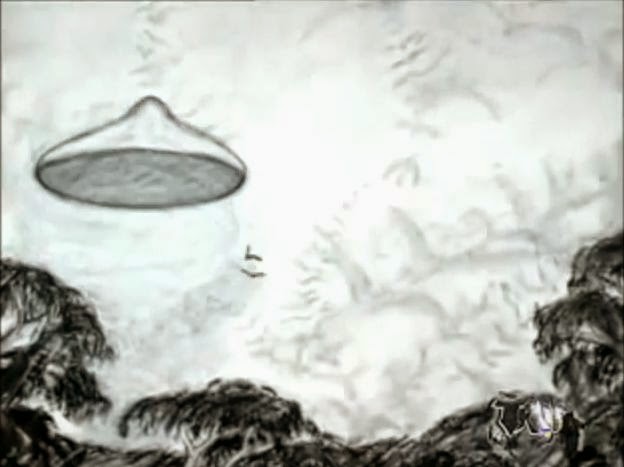
 Yet (joking aside) this is what happened to staff, students and neighbours of Westall High School in Melbourne’s southeast back in April 1966. At around 11 o’clock on an apparently normal Wednesday morning, their reality was turned inside out by the appearance of a silver disc hovering and then landing just behind a line of pine trees in nearby Grange Reserve. It eventually shot off at jaw-dropping speed, but not before some kids were able to run over and get a closer look.

So what was it? Some 48 years after the event, this remains a mystery. Judging by the recollections of some of the witnesses in the documentary Westall '66: A Suburban UFO Mystery, it sure as hell wasn’t a weather balloon or experimental aircraft like they were told. But they soon realised that if they talked about it, they’d be considered crazy.

These drawings are stills from the evocative animated sequences by artist Lee Whitmore that illustrate some of the recollections recounted in the documentary Westall '66: A Suburban UFO Mystery
Immediately after the event, the school principal called an assembly, where he told the students that all they'd seen was a weather balloon. He banned them from speaking to the journalists that had congregated outside (although some did) – and as a result, there wasn’t a lot of media coverage. Channel 9 news reported on it at the time, but the film has since gone missing.

Local newspaper The Dandenong Journal ran a couple of stories, but never got to the bottom of it:
"The Dandenong Journal - 1966 14th Apr - page 1" by Photo or scan of newspaper page, and intellectual property owned by The Herald and Weekly Times Ltd, News_Corporation. Licensed under Fair use of copyrighted material in the context of The Herald and Weekly Times Ltd via Wikipedia -

Not wanting to come across like a crackpot is a powerful motivator to shut your trap for most people; even more so for adolescents, I guess, at that stage of life where you just want to fit in. But even teachers felt the pressure. One was visited by some mysterious government types who told him that if he didn’t keep quiet, they’d spread rumours that he was an alcoholic. Another, who’d taken photos of the flying saucer, had her camera confiscated.

Westall '66 gives the witnesses a chance to speak about the incident without fear of judgement. Not all the stories are consistent: some mention seeing two flying saucers; others remember the UFO playing a game of cat and mouse with a group of small airplanes. Some recall getting so close to the craft that they could feel the heat emanating from it. Others remember a large circular imprint of flattened grass where the object had landed. There's even talk of a girl called Tania who got to Grange Reserve first, fainted, was taken off in an ambulance and never seen again.


Cover illustration from The Clayton Calendar, a school publication from the time
In the days that followed, students and other locals saw official-looking men in suits at the site of the UFO landing and at the school, but nobody knows who they were associated with. The Australian military? The US military? ASIO? Researchers into the event have come up against a brick wall in terms of archived documents or reports; even the RAAF’s records of UFOs for 1966 don’t mention Westall.

Fascinating stuff. 
There is now an extraterrestrial-themed kids' playground at The Grange, complete with flying saucer! (Pic: Weekend Notes, Melbourne)
And the theories keep coming. Just last month in The Herald Sun, there was an article claiming that the silver disc seen by the Westall students all those years ago was in fact a special silver balloon used to test radiation levels post-Maralinga, which had blown off-course after being launched from Mildura.

While I couldn’t possibly do justice to the quirks and convolutions of this confounding slice of Melburnian history in one blog post, I can definitely recommend the documentary, following researcher Shane Ryan's quest to uncover the truth. Spoiler alert: he doesn't.
These witnesses are definitely not crazy. The official cover-up is like a plot from the X-Files. And I simply can’t get Creedence Clearwater Revival’s “It Came Out of the Sky” out of my head…

Wednesday, August 27, 2014

Song of the month: "Claudette Jones"/Peter & the Silhouettes (December 1966)

Some of you might be familiar with The Louie Report, a blog dedicated to Richard Berry’s party classic “Louie, Louie” (it even profiles the version by Melbourne’s own Pink Finks, who featured in this blog very recently). Apparently more than 1000 artists have covered “Louie Louie” over the years – making it the second-most covered pop song ever (after “Yesterday” by the Beatles). Too bad poor old Richard Berry never got any royalties for it.

Kinda like
“Louie Louie,” Peter & the Silhouettes’ 1966 garage stomper “Claudette Jones" has inspired more than a few cover versions in its time. Unlike "Louie Louie", however, the original version of “Claudette Jones” is still the best*. Mind you, the covers aren’t so bad either (but more on those shortly).
Peter & the Silhouettes, 1966. L-R: Kieran Keogh, Manuel Pappos, Peter Rechter, Tony Truscott, Kevin Clancy
First things first: Peter & the Silhouettes hailed from Bendigo (where they were hugely popular) not Melbourne, but I think we can overlook a minor geographical detail like that. The fact is, “Claudette Jones” is such a fun, fuzzed-out slab of garage grooviness that where it comes from is immaterial.


This song ticks all the boxes for a bloody good time: thumping drums, dinky Farfisa organ, silly lyrics and an instantly catchy chorus, topped off with some sizzling fuzz guitar. Personally, I think music critic Richie Unterberger’s description of “Claudette Jones” as “pretty fair garage pop” misses the mark completely: it’s a bonafide ripper, and while it may not have set the charts on fire, that’s only because it never came out as a single. 


Recorded in Johnny Chester’s Melbourne studio at W&G in 1965, “Claudette Jones” was eventually released in 1966 as part of The Scene from Northern Victoria, a compilation showcasing the regional talent of the day (apparently the rest of the album was rather underwhelming). Since then, it’s appeared on Kavern 7’s cracking compendium of unsung 60s Aussie garage, It’s a Kave-In, which is where I first heard it, and possibly on other compilations too.

If you don't have it already, you need this album!
By 1967, Peter & the Silhouettes had morphed into The Tol-Puddle Martyrs. Under this name, they released a couple of singles and played regularly in Melbourne. They even came fourth in the 1968 national grand final of the Hoadley Battle of the Bands competition. But the big time eluded them, and finally the group fizzled out.


Vocalist/keyboard player Peter Rechter moved to Melbourne to study music, and ended up playing in a series of other bands. In about 2006, The Tol-Puddle Martyrs reformed, and I was lucky enough to see them play a short set at Bar Open. Forty years after its original release, “Claudette Jones” had lost none of its energy or garage goodness.

The Claudette Jones legacy

Anyway, for the music nerds among you, here are a few of the “Claudette Jones” covers I mentioned.

99th Floor (Italy, 1993):
Any band calling itself The 99th Floor is gonna get it right, and this version proves my theory correct! Super-faithful to the original, its charm factor is magnified by the singer’s Italian accent. Unfortunately, this Youtube upload cuts off before the end, but trust me – it’s worth a listen. 


Lords of Gravity (Melbourne, 2005):
This dearly-missed Melbourne band wowed local punters with their intense live shows and 60s sounds. Here they are doing “Claudette Jones,” only heavier, faster, wilder! Dig that waspy fuzz and Lord Evan’s blood-curdling scream.


Firebirds (Netherlands, 1995):

A tad too fast for my liking, but Claudette bears up pretty well under the super-sonic treatment. The Firebirds clearly have their hearts in the right place and energy to burn! 


Kamikaze Trio (Melbourne, 2004)
“Claudette Jones” meets straight-ahead Oz rock: complete with a very modern drum sound and a blatant absence of fuzz or Farfisa. But the fact it remains listenable is testament to the song’s timeless appeal. Listen here
 

And finally, The Tol-Puddle Martyrs!
It’d be remiss of me not to include this 2006 video, featuring the reformed Tol-Puddle Martyrs and certain faces from around the current Melbourne music scene that some of you might recognise….


* No question about it: the best version of “Louie Louie” ever recorded was by The Sonics.

Monday, August 18, 2014

Then and now: time-warping in Port Phillip Arcade

I’d never been in Port Phillip Arcade until a couple of weekends ago — it just hadn’t registered in my consciousness, despite its Flinders Street frontage and intriguing metal King Neptune sculpture above the entrance. Compared to some of this city’s better known, grander arcades (Block Arcade, for example) Port Phillip Arcade isn’t what you’d call a head-turner.

In fact, with the exception of Neptune, it’s rather drab.


Still, there’s something defiantly no-frills and untrendy about it, which in this faddish age is kinda sweet, I guess. Home to cheap’n’cheerful Asian eateries, a cake-decorating emporium, an enormous stamp shop that’s apparently been there since the year dot, an engraver and a cafĂ©, Port Phillip Arcade is nothing if not utilitarian.


But let’s face it: it’s seen better days…
Photo: Wolfgang Sievers, 1969 (National Library of Australia)
Photo: Wolfgang Sievers, 1969 (State Library of Victoria)
Photo: Wolfgang Sievers, 1969 (National Library of Victoria)
These gorgeous photos by Wolfgang Sievers show the arcade looking shiny and modern, with its American coffee shop and its ‘cake bar’ (anyone know what a hamburger puff is?).

Photo: Wolfgang Sievers, 1969 (State Library of Victoria)
I’m guessing Lillian Lingerie (below) catered more to the budget-minded shopper than the babelicious if the window display is anything to go by. 

Check out the painting above the doorway of the store next to Lillian's! Photo: Wolfgang Sievers, 1969 (State Library of Victoria).
For those whose historical interests extend to ye olde colonial times, here’s an interesting fact: Port Phillip Arcade stands on the site of the former Port Phillip Club Hotel, a venerable old building dating from 1838. But who should come along to demolish it in 1960? None other than the notorious Whelan the Wrecker — a name synonymous with the loss of much of Melbourne’s pre-modern architectural heritage… 

Photo: Wolfgang Sievers, 1969 (State Library of Victoria)

Related posts
Then and now
Then and now: when American jet-set and Beatlemania came to town

Then and now: Tram town!

Sunday, July 27, 2014

Melbourne song of the month: “You’re Good for Me”/The Pink Finks (May 1966)

Before there was Daddy Cool (and well before the 80s blandness of Mondo Rock), there was The Pink Finks, Ross Wilson’s first band. Formed in 1965 when Ross was a 16-year-old school boy and Ross Hannaford was about 14 (how cute is that? Two teenage Rosses!), The Pink Finks were inspired not only by American r’n’b and blues, but also by British bands such as The Yardbirds, Stones and Pretty Things who covered that kind of music.

Five Finks: L-R Ross Hannaford, Ross Wilson, Geoff Ratz, David Cameron, Richard Franklin
The Pink Finks didn’t have a long lifespan, lasting from late 1964 to late 1966, but they managed to release four singles during this time (on three different labels) and were a popular R’n’B act around the suburban Melbourne dance hall scene. However, due to their young age, their gigs tended to be limited to weekends only. Legend has it that Ross Hannaford’s parents turned up at one show and dragged their naughty (and very underage!) son home. That’d cramp your style a bit. 

Rocking out at Festival Hall in the 1965 Hoadley Battle of the Sounds final (they didn't win: The Crickets did). Photo: Everybody's
“You’re Good for Me” was The Pink Finks’ fourth and final single, released on W&G. This scorchin’ little number, clocking in at 1 minute, 35 seconds, was written and produced by 50s rocker Johnny Chester (who’d supported The Beatles on their Aussie tour just two years earlier) and is a bonafide gem.


Puzzlingly, it didn’t chart and didn’t even rate a review in Go-Set magazine. Weirder yet is the fact that it hasn’t cropped up on any Aussie 60s comps that I’m aware of. Fortunately, it lives on as part of the 1980 Raven EP, “Louie Louie” and — of course— on the fathomless rock’n’roll wormhole that is Youtube. (Somehow, I suspect the original 7” is about as elusive as Tony Abbott’s humanity, but that’s another story…)


As I’ve mentioned before, I’m a big fan of a short song, and “You’re Good for Me” fits that bill to a small-but-perfectly-formed T. Rollicking along at a cracking pace (but not so fast it loses its groove), it’s distinguished by Hannaford’s fluid, rockin’ guitar licks (with more than a passing nod to Chuck Berry) and Wilson’s bratty, snarling vocals. Funny to think that he’d been a wedding singer before the Finks, because he’s a damn sight more Mick Jagger than Frank Sinatra, if you know what I mean…


For those of you who’d like to know more about this shortlived but important band, check out their chapter in the ace book Wild About You. Otherwise, turn up the volume and play it again…


Think Pink. Pic: imdb.com

Related posts
Melbourne song of the month: The Loved One
Melbourne song of the month: 5:10 Man

Sunday, July 13, 2014

Mystery girl: Jan Stewart

In this day and age of digital footprints and full-disclosure Facebooking, there’s little that a good Google search won’t reveal. However, as I discovered today, the worldwide web falls intriguingly short when it comes to 1960s fashion model Jan Stewart.

Jan glamming it up in some swinging ski gear. Photo: Janice Wakely
As far as I know, Jan was from Melbourne, and worked with local photographers such as Bruno Benini (profiled in an earlier blog post) and Maggie Diaz.
Reclining Jan. Photo: Maggie Diaz
With her Audrey Hepburnesque features and natural grace, she was every bit as divine as my favourite 60s model Jean Shrimpton — but clearly didn’t hit the same heights of fame, because I simply can’t find anything about her online except a few photos and an interview snippet where she recalls the staging of this fabulous shot in a Little Collins Street building site for Sportsgirl:


Frock with a view. Photo: Bruno Benini
So, unless anyone out there can tell me more about this beautiful mystery babe, we’ll just have to be content to swoon over her… Besides, as they say, a picture’s worth a thousand words.

Jan doing Jean! How Shrimpton is this? I have a postcard of this pic somewhere, from that 2011 Como House exhibition, Mannequin. Wish I could find it so I could give the photographer due credit...
Yogi Jan. Photographer also unknown.